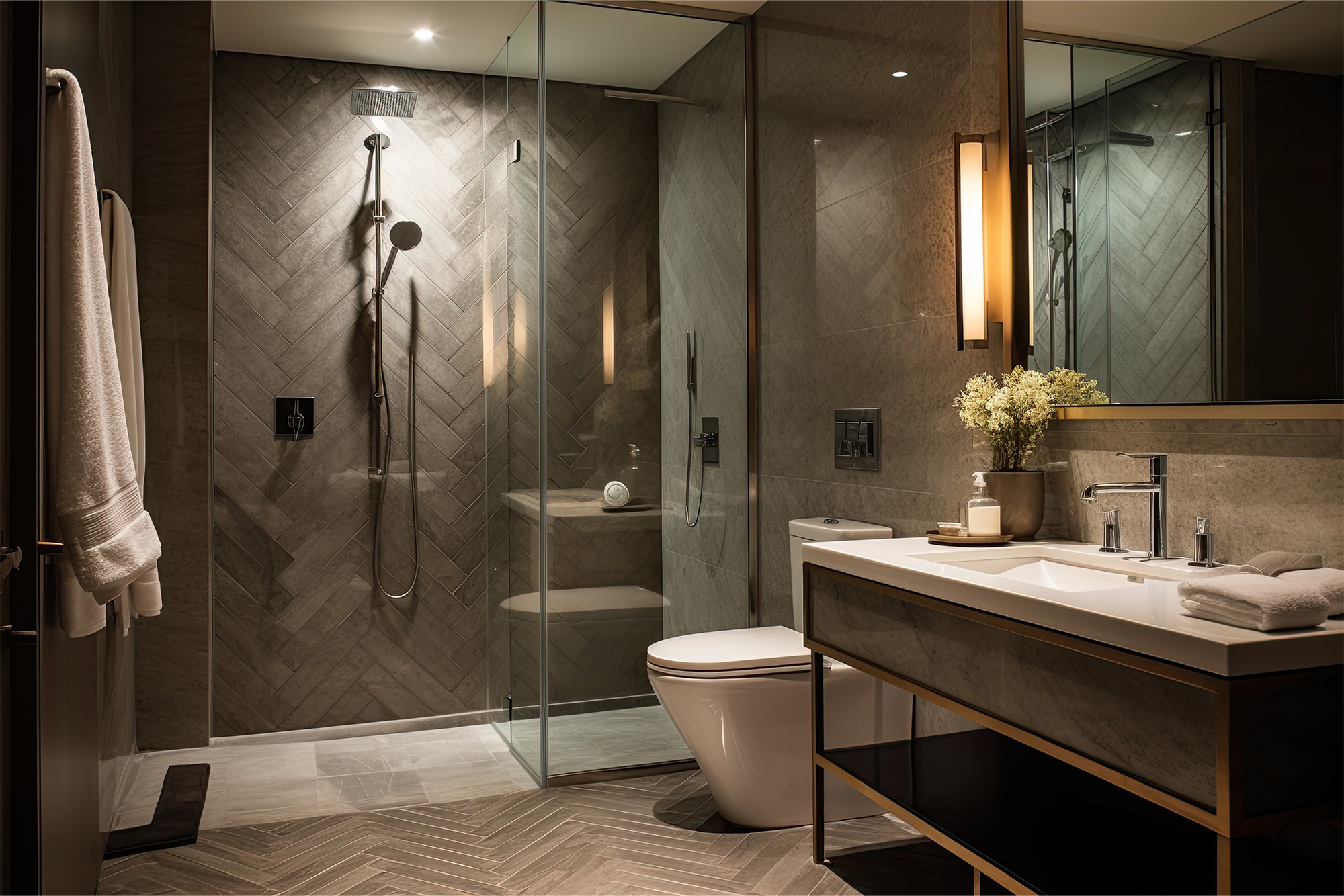
Plenty of homes across Bourbonnais, Kankakee, Manteno, Watseka, Bradley, and the surrounding areas have a bathroom tucked into an interior wall with one small window, or none at all. Homeowners try the obvious fix first, painting everything white and adding a brighter bulb, then find the room still feels flat. Brightness is not one variable. It is light output, light quality, light position, and surface reflectance working together, and the usual fixes only address one of those.
Why White Paint on Its Own Often Falls Short
White works by bouncing light around a room, which means it needs light to bounce in the first place. Finishes are rated by light reflectance value, a scale describing how much light a surface returns rather than absorbs. In a room with generous daylight, the difference between a bright white and a deep charcoal is dramatic. In a windowless room with one modest fixture, less light enters the system, so white has less to return and can read closer to a dull grey than the crisp white on the paint chip.
This does not make white the wrong choice, and plenty of light, airy bathrooms are built exactly that way. It means the palette and the lighting plan have to be decided together. A pale scheme performs beautifully when the lighting is genuinely layered and well placed. A deeper, richer scheme also works, because the room then reads as a deliberate, intimate space rather than one trying and failing to feel sunlit. Both are valid. What rarely works is a pale scheme paired with a single ceiling fixture.
The Bulb Specification That Changes More Than Another Fixture
Color rendering index, usually shortened to CRI, describes how accurately a light source shows the true color of what it illuminates. Many general purpose bulbs sit in the low to mid eighties, which is fine in a hallway but noticeably flattening in a bathroom. Tile veining loses depth, warm wood tones look muted, and stone that looked rich in the showroom reads greyer at home. Moving to a bulb rated ninety or above often does more for a dark bathroom than adding another ceiling fixture.
Color temperature, measured in Kelvin, is the other half. Warmer light around 2700K feels relaxed, around 3000K reads clean and natural, and anything above 4000K can feel clinical in a small room. The specific number matters less than consistency. Mixing temperatures between the vanity light, the ceiling can, and the shower fixture is one of the most common reasons a bathroom looks slightly off without anyone being able to say why.
Light at Face Height Beats Light From Above
The vanity exists mainly for tasks done looking into a mirror, and overhead light is poorly suited to that job. A fixture or recessed can positioned above the mirror throws light downward, dropping shadow into the eye sockets and under the chin. The room can be technically bright and still be difficult to shave or apply makeup in, which is usually the real complaint behind someone saying their bathroom feels dark.
Light arriving from the front at roughly face height solves this. Sconces flanking the mirror, or vertical fixtures either side, fill those shadows in rather than casting them. A horizontal bar above the mirror is the most common arrangement and is certainly better than a bare ceiling light, though it still works from above. Where wall space is tight, a backlit or integrated lit mirror does something similar without needing room on either side.
Surfaces Are Doing Half the Work
Finish tends to matter more than color. The same tile in a polished finish and a honed one behaves very differently, because polished reflects light deeper into the room while matte absorbs a good deal of it. Matte has real advantages, including better slip resistance underfoot and a softer look that hides water spotting, so this is a genuine trade off rather than a right answer. Many bathrooms split the difference with matte on the floor for grip and something more reflective on the walls.
The same logic runs through everything else. A glass shower enclosure lets light travel the full depth of the room where a curtain stops it at the tub line. A larger mirror, or a second on an adjacent wall, effectively doubles whatever light exists. Vanity cabinetry contributes too, since a higher sheen door finish returns light that a flat matte finish quietly absorbs. None of these is dramatic alone, and together they often outweigh the paint color everyone starts with.
If your bathroom feels dark no matter what goes on the walls, Heartland Cabinetry & More can help you plan the lighting, tile finishes, and vanity together rather than as separate decisions. We serve homeowners throughout Bourbonnais, Kankakee, Manteno, Watseka, Bradley, and the surrounding areas, and you are welcome to see tile and cabinet finishes under showroom lighting at Bourbonnais, IL. Explore our Bathroom Remodeling services or contact us to talk through what your space actually needs.