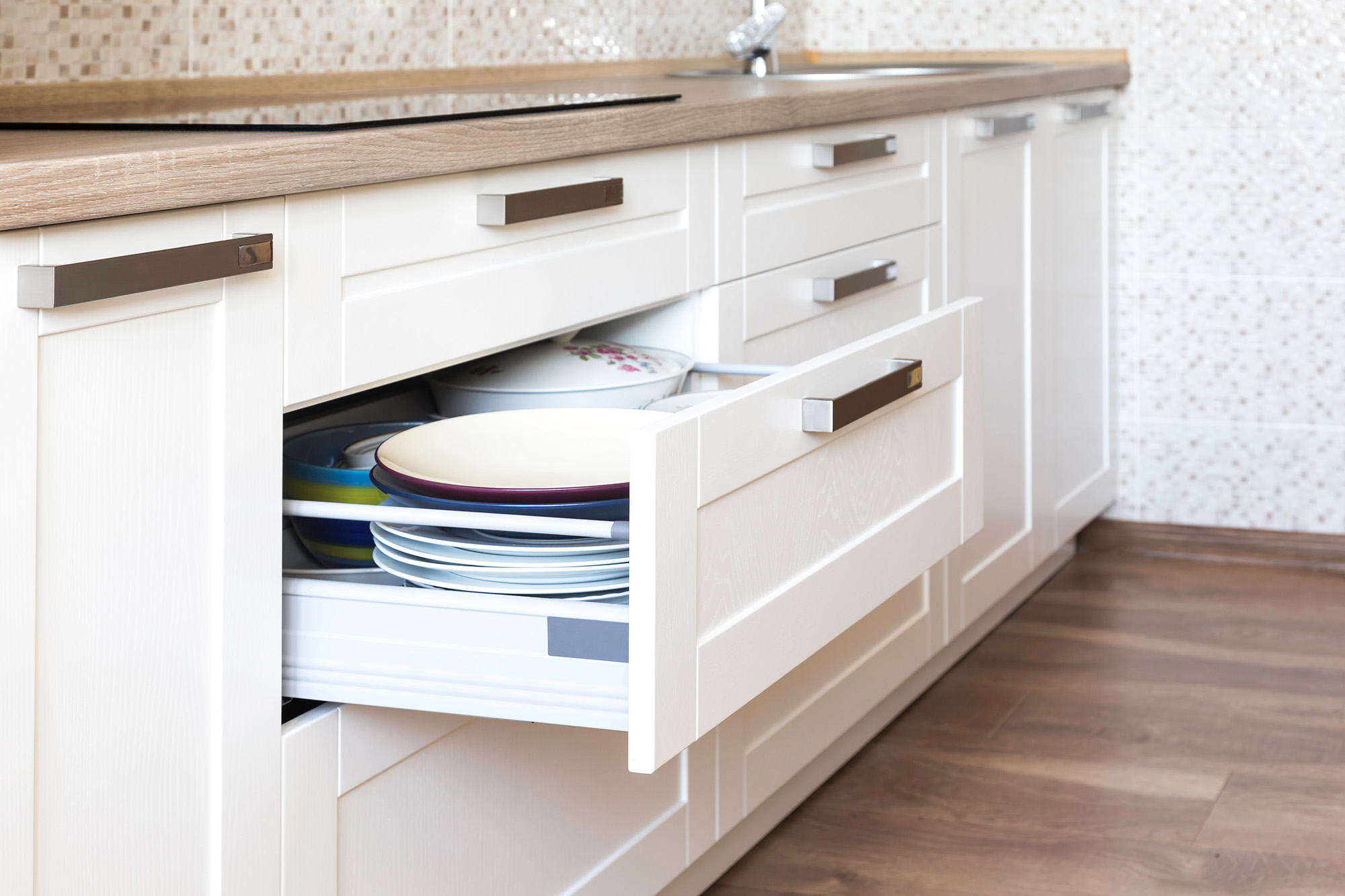
Homeowners across Bourbonnais, Kankakee, Manteno, Watseka, Bradley, and the surrounding areas ask this constantly, usually because keeping sound cabinetry is a sensible way to direct budget toward the parts of a kitchen that need it more. The trouble is that the usual answer, keep them if they are real wood, gets it backwards. Plenty of perfectly solid cabinets are not worth keeping, and plenty of ordinary ones are. What settles it is the condition of the boxes, whether the layout still works, and whether the finish can be brought back.
Separate the Box, the Layout, and the Finish
These three get talked about as one decision and they are not. The finish is the most visible and the easiest to change, since doors, drawer fronts, and hardware can all be replaced while the boxes stay put. The box is the structure, and its condition determines whether anything mounted to it sits properly. The layout is where those boxes actually are, and that is the one with no fix short of moving them.
Getting the order right saves a lot of wasted deliberation. If the layout is wrong, meaning the corner storage is unusable or the fridge sits somewhere awkward, the condition of the boxes barely matters. Keeping cabinetry you intend to relocate rarely saves much, because the labor of pulling, modifying, and refitting adds up while the boxes are the part you already own. Where the layout genuinely works, box condition becomes the deciding factor, and the finish is almost always addressable either way.
Check Whether the Boxes Are Still Square
Houses settle, and older homes around Kankakee County have had decades to do it. When a wall moves, the cabinet run fixed to it moves too, and boxes slowly rack out of square. The symptom is doors that will not line up however often the hinges get adjusted, or a gap that runs wider at the top than the bottom between two adjoining doors. Running a level along the face frame and checking a few diagonals inside the boxes tells you quickly whether you have worn hinges or a racked cabinet.
This matters because new fronts will not correct it. Fitting crisp new doors to a run that is out of square reproduces the same misalignment on brand new material, which is a frustrating outcome after the work is done. A single racked box in an otherwise sound run can sometimes be reset or shimmed, which is worth investigating before writing off the whole kitchen. A full run that has shifted together is usually telling you something about the wall behind it, and that is worth understanding before any cabinetry decision gets made.
Uppers and Lowers Rarely Age at the Same Rate
These two get lumped together and they live very different lives. Lowers take standing water at the sink base, impact from feet and vacuum cleaners, and the weight of heavy cookware on shelves and glides. Uppers take heat and grease from the range, plus steam that rises and sits against the underside and door faces. One set often has years of service left while the other does not, and inspecting them as a single unit hides that.
The sink base deserves its own look, since it is the most common point of failure and it does not condemn the rest of the run. Swelling at the bottom of the box, a soft or discolored floor panel, or a back panel that has separated usually points to a slow supply or drain leak rather than general wear. In many kitchens that one cabinet is the problem and everything either side of it is fine. Checking interiors, shelf sag, and back panels tells you far more about remaining life than looking at the doors, which is where most people start.
Know What Hardware Can and Cannot Retrofit
Soft close hinges and full extension glides can often be fitted to existing cabinetry, and that upgrade changes the daily experience of a kitchen more than most people expect. Whether it is straightforward depends on how the cabinets are built. Face frame construction, where a solid frame sits across the front of the box, and frameless construction, where the door mounts directly to the box edge, take different hardware and offer different room to work with. Interior depth and the condition of the mounting points both factor in.
This is the check most worth doing before assuming cabinets have to go, because sound boxes with dated hardware present as tired kitchens when the underlying cabinetry is fine. It is equally worth being realistic in the other direction. Where boxes are racked, water damaged, or lack the depth to take modern glides, retrofitting becomes more work than it returns and new cabinetry is the cleaner path. Both outcomes are common, and a walkthrough with someone who can open the boxes and look properly tells you which one you are in.
If you are weighing whether to keep or replace what you already have, Heartland Cabinetry & More can walk your kitchen with you and give you a straight read on the boxes before any decision gets made. We serve homeowners throughout Bourbonnais, Kankakee, Manteno, Watseka, Bradley, and the surrounding areas, and you can compare construction and hardware options in person at Bourbonnais, IL. Explore our Cabinetry options or contact us to book a walkthrough