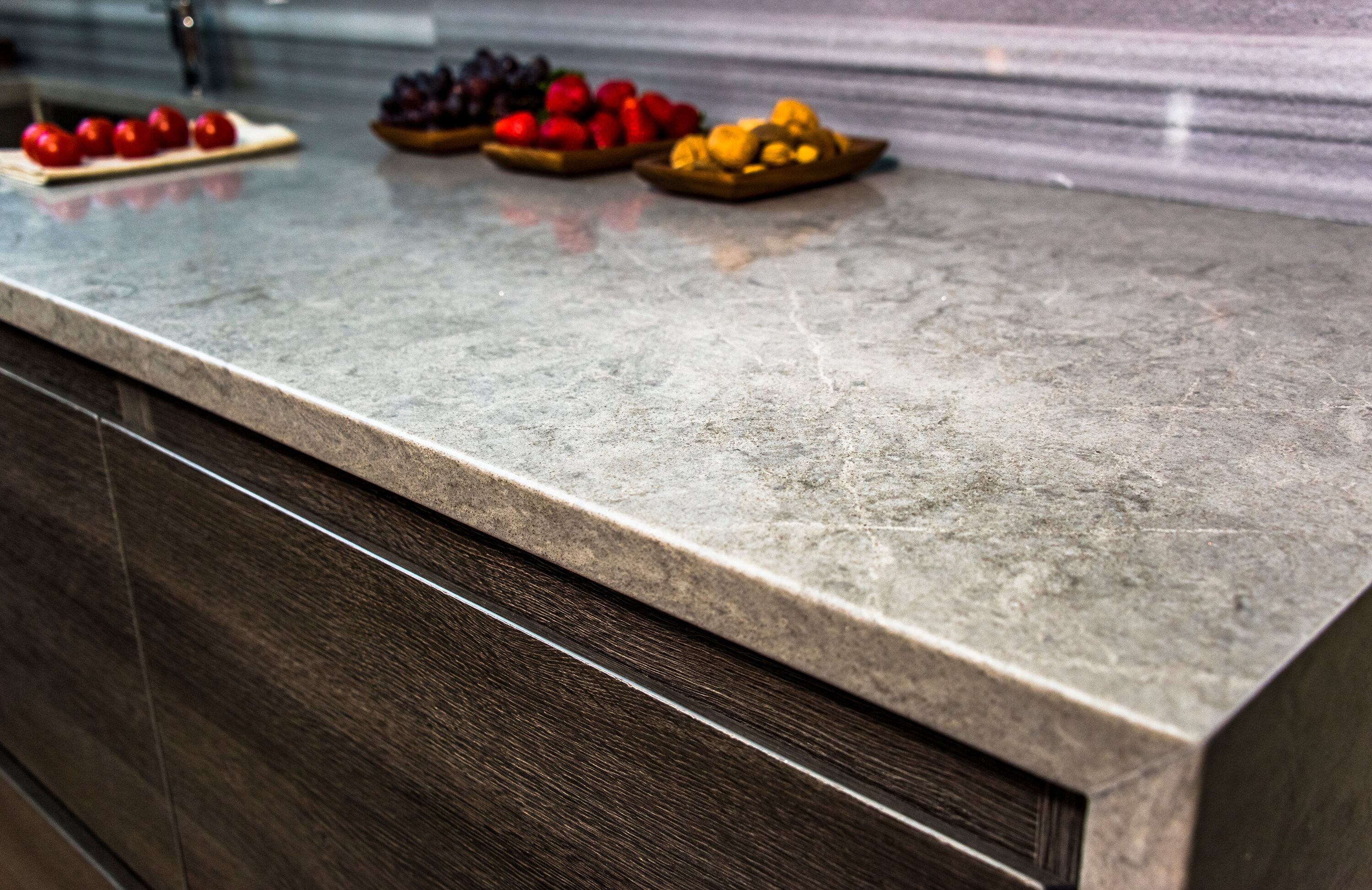
A countertop takes more daily abuse than any other surface in a kitchen, from hot pans set down without a trivet to red wine left sitting a little too long. Choosing a material based on looks alone often means dealing with etching, staining, or scratches within the first year of a remodel, while the right choice for your household can go a decade or more without showing its age.
Why Porosity Determines Stain Resistance
A countertop's porosity, meaning how many microscopic openings exist in its surface, determines how easily liquids soak in rather than sitting on top where they can be wiped away. Highly porous materials like unsealed marble or some natural stones absorb wine, oil, and citrus juice quickly, which is why these spills leave a mark even when cleaned up within minutes.
Engineered quartz sits at the opposite end of the spectrum, since it is manufactured with resin binding the stone particles together into a nearly nonporous surface. This is why quartz resists staining from coffee, tomato sauce, and other common kitchen culprits far better than most natural stone options, without requiring the sealing that porous materials need to stay protected.
Scratch Resistance Comes Down to Hardness
Every countertop material sits somewhere on a hardness scale, and that hardness determines how well it resists everyday scratches from knives, pots, and appliances sliding across the surface. Granite and quartz both rank high on this scale, which is why neither shows much wear even in households that do not consistently use cutting boards.
Softer materials like butcher block or soapstone scratch more easily by comparison, though many homeowners consider this part of their character rather than a flaw, since these surfaces are meant to develop a lived in patina over time. The key is matching the material to your household's actual habits rather than assuming every surface performs the same way under a knife blade.
Matching Material to How You Actually Cook
A household that cooks daily with acidic ingredients like tomatoes, citrus, and wine benefits most from a nonporous surface like quartz, since the constant exposure to these ingredients is exactly where porous materials fail fastest. Someone who cooks less frequently or primarily reheats meals has more flexibility to choose a material based on appearance alone, since daily wear simply is not a major factor for their kitchen.
Households with kids also tend to do better with quartz or granite over more delicate natural stone, since spills sit longer before getting wiped up and countertops take more incidental impact from dropped dishes and toys. Being honest about your actual kitchen habits during material selection saves a lot of frustration compared to choosing based on a showroom sample alone.
What Daily Maintenance Actually Looks Like
Quartz and granite both require minimal daily maintenance beyond a simple wipe down, though granite benefits from periodic resealing to maintain its stain resistance over the years. Skipping that resealing does not damage granite immediately, but it does gradually reduce the material's ability to repel the spills it was originally sealed against.
Marble and other soft natural stones require more careful daily habits, including wiping up acidic spills immediately and avoiding abrasive cleaners that can dull the surface over time. For homeowners drawn to marble's look but not its maintenance schedule, several quartz lines now replicate that veining closely enough to satisfy the aesthetic without the upkeep.
Choosing the right countertop material starts with an honest look at how your kitchen actually gets used every day. Heartland Cabinetry & More can walk you through stain and scratch performance across every material we carry so you choose with confidence. We serve homeowners throughout Bourbonnais, Kankakee, Manteno, Watseka, Bradley, and the surrounding areas and invite you to see samples in person at Bourbonnais, IL. Explore our Custom Countertops selection or contact us to find the right material for your kitchen.